How it works
Every case, one clear path.
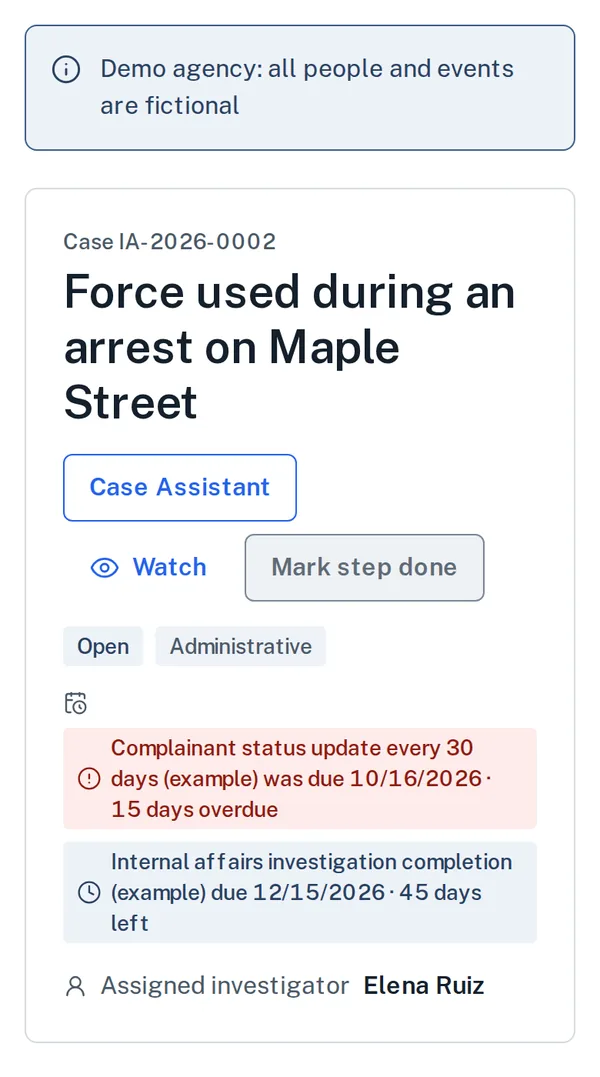
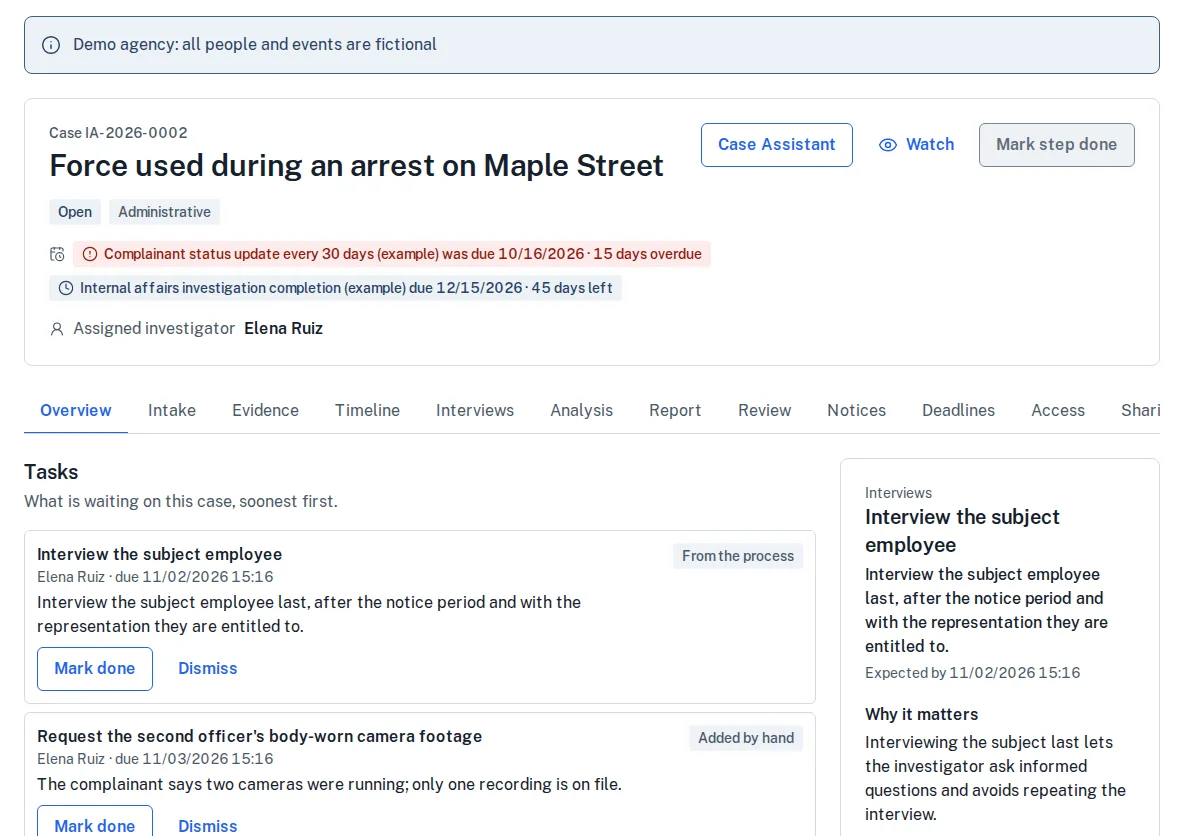
Guided steps show the next action, why it matters and how to do it well. Clocks from law, policy and the contract never slip.
01Intake
A complaint arrives from the public form or from staff, with a reference number the complainant can use to check on it. The agency's intake rules decide what happens next.
02Triage and assignment
A lead classifies the allegation and assigns an investigator. The system checks conflicts and rank before the assignment is made, and records who decided.
03Investigation
Evidence, interviews and the timeline live with the case. Each step explains what it is for, and the quality check names what is missing before the case moves on.
04Deadlines
Deadlines from statute, agency policy and the labor contract are computed from rules the agency adopts, shown on the case, and alerted before they are missed.
05Report, review and closure
The investigator certifies the report. Reviewers and the decision-maker record concurrence, findings and any discipline. Closure triggers the notices and reports the law requires.
Access is by invitation while CoordinatedIA is in early access.