Fair process
Everyone sees what they're entitled to, on time.
Officers, representatives, complainants and counsel each get controlled, recorded access to notices, deadlines and evidence.
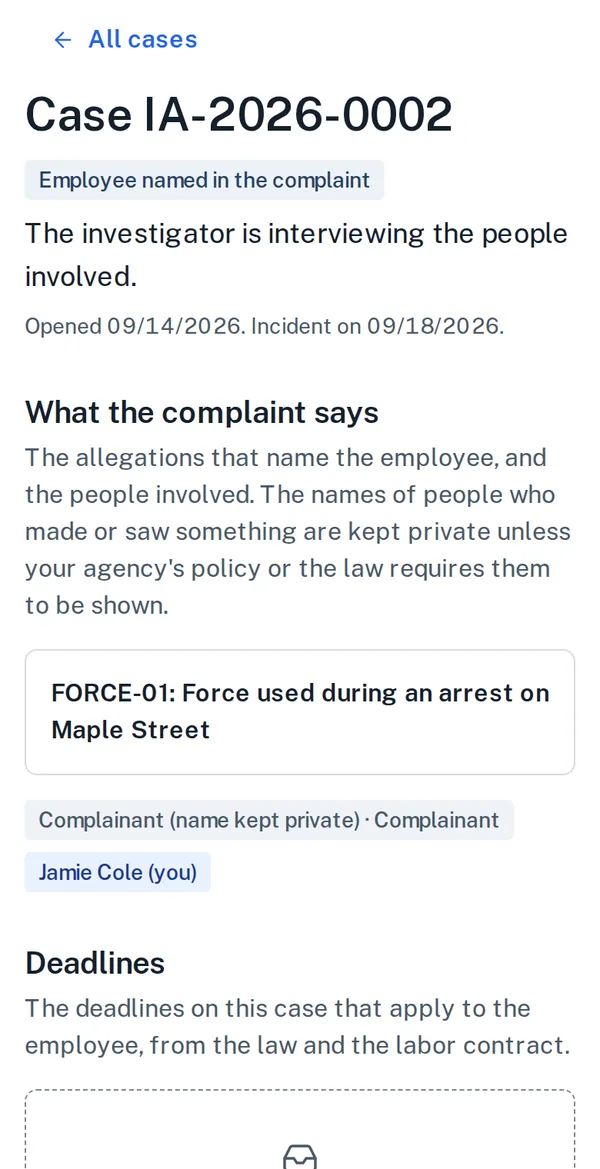
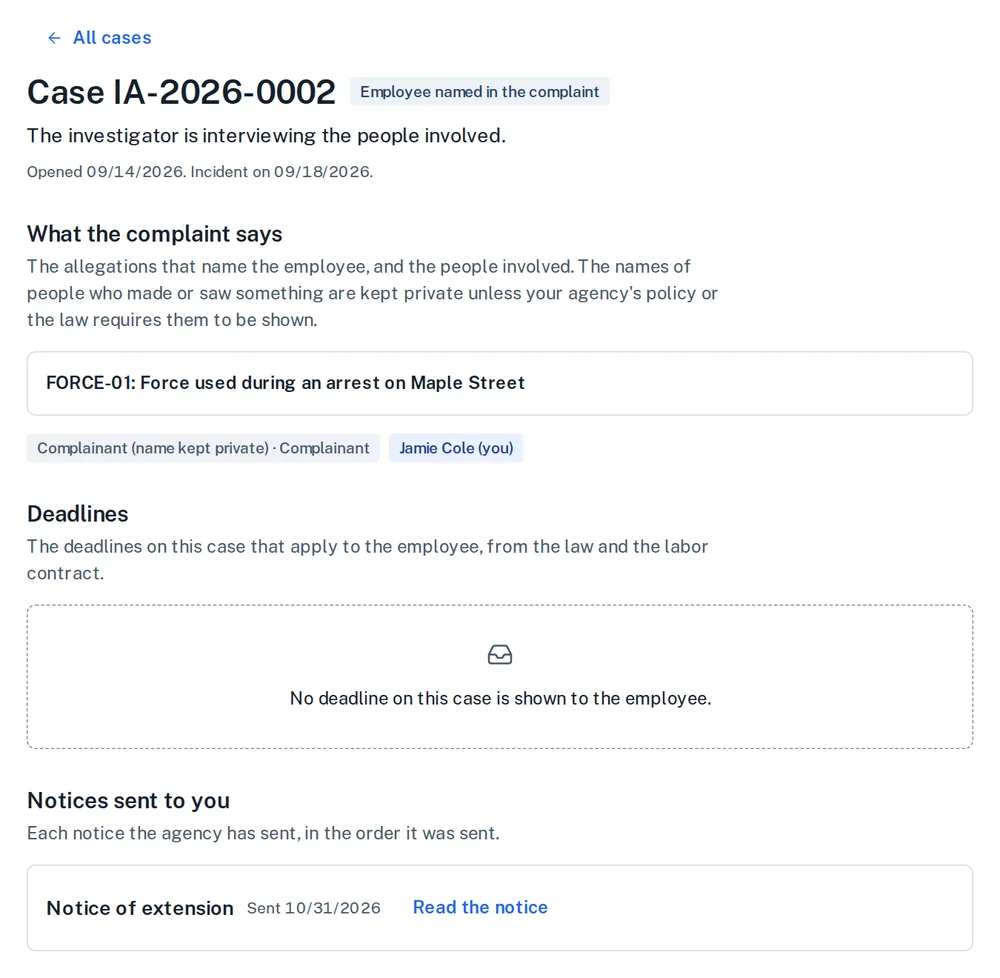
01Officers and representatives
An officer sees their own cases: the notices they are owed, the deadlines that apply, and the evidence the law or contract entitles them to. They can delegate to a representative, and the delegation is recorded.
02Complainants
A complainant needs no account. They file, check status in plain language, add information and receive the updates the agency has committed to. Only their own submission is visible to them.
03Counsel and oversight
Counsel sees the legal case file for the cases they are granted. Oversight members see a redacted view of the cases shared with them. Neither can change the record.
04Every view is recorded
Access is granted per case and per person, expires when it should, and is written to a tamper-evident log the agency can read.
Access is by invitation while CoordinatedIA is in early access.